Why one reading is not a diagnosis
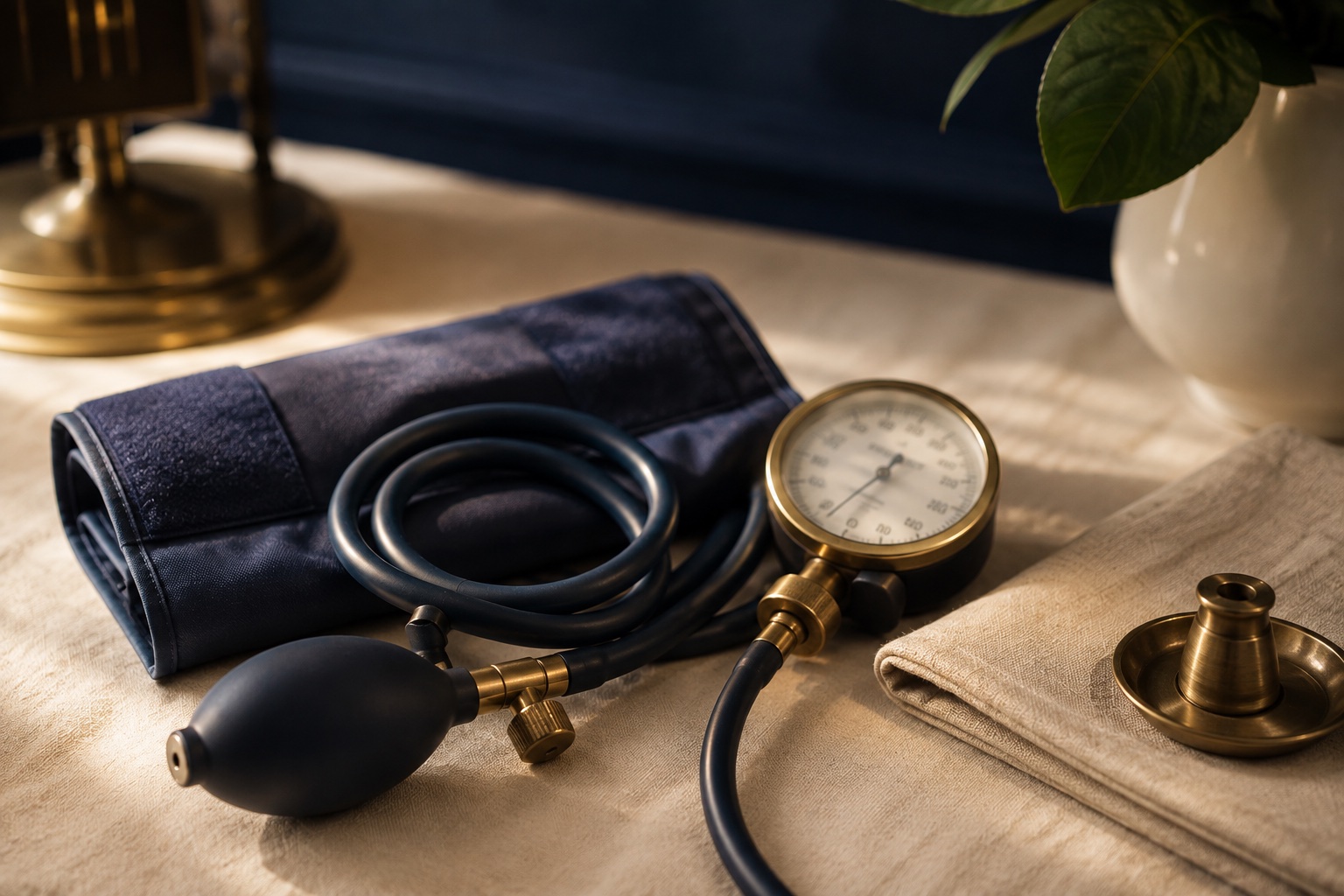
Blood pressure moves all day — with effort, stress, coffee, conversation, and with the simple fact of being measured by someone in a clinic. UK guidance therefore builds the diagnosis on confirmation: a raised clinic reading of 140/90 or more prompts ambulatory monitoring — a cuff worn for 24 hours of normal life — or a structured week of home readings, before hypertension is diagnosed [1][2]. Many people whose clinic reading looks alarming turn out to average normal at home; the reverse also happens, and only monitoring finds either [1][2].
Where the thresholds sit
In round terms, under UK guidance [1][2]:
- Around 140/90 in clinic — the trigger to confirm properly, not yet a diagnosis.
- A daytime average of 135/85 or more on monitoring — stage 1 hypertension.
- An average of 150/95 or more — stage 2, where treatment is recommended.
- Whether stage 1 is treated with tablets depends on your overall risk — age, kidneys, diabetes, existing heart disease — which is exactly what an assessment weighs [1].
What it does to the heart
Untreated high pressure makes the heart push against resistance with every beat. Over years the muscle thickens and stiffens, the risk of atrial fibrillation, heart failure, heart attack and stroke climbs — and none of it announces itself on the way [2][3]. That silence is the reason measuring matters: this is a risk you can only see by looking.
Acting on the numbers
The response is rarely dramatic and usually cumulative: weight, salt, alcohol and activity genuinely move the numbers; medication, when indicated, is chosen and adjusted against confirmed averages rather than clinic snapshots [1][2]. If your readings at home and in clinic disagree, or your treatment never seems settled, a proper assessment with ambulatory monitoring is the step that replaces guesswork with numbers you can trust.