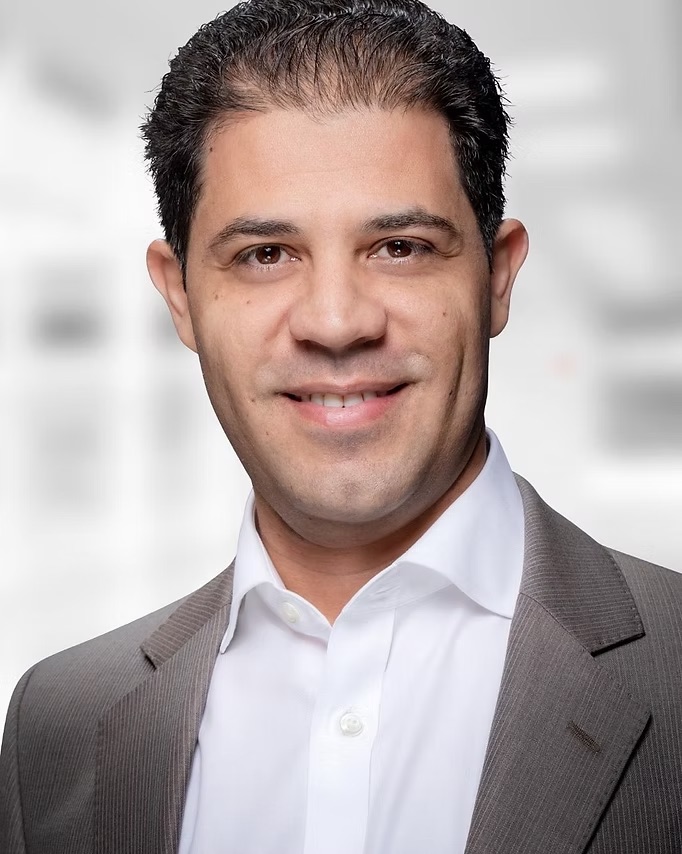
Dr Mohssen Chabok
Consultant Interventional Cardiologist — MD, MSc, PhD, MRCP
GMC number 7021881
Dr Chabok is a consultant interventional cardiologist at Royal Brompton and Harefield Hospitals, part of Guy's and St Thomas' NHS Foundation Trust, and at The Hillingdon Hospitals NHS Foundation Trust. At Harefield Hospital he is part of the 24-hour primary angioplasty service, providing emergency treatment for patients in the acute phase of a heart attack. He is on the UK Specialist Register in both Cardiology and General Internal Medicine (registered with the GMC as Mohssen Chabok Golberenji).
He completed his medical degree at the Tehran School of Medicine in 2006, an MSc in Vascular Ultrasound at Imperial College London in 2010 — with distinction — and a PhD in Cardiovascular Medicine at Imperial College London in 2020, alongside Membership of the Royal College of Physicians in 2016. He trained in cardiology and general internal medicine on the North West Thames rotation in London, was appointed an interventional cardiology fellow at Hammersmith Hospital in 2018, and became a consultant in 2021.
Before his specialist training he spent five years overseeing community cardiovascular screening clinics across the UK and Ireland, as Clinical Manager and then Clinical Director — building research collaborations with Imperial College London and the University of Oxford around a single question: can serious cardiovascular disease be found before it causes symptoms?
Treating a heart attack
When a coronary artery blocks suddenly, the aim is to restore blood flow as fast as possible. Rather than relying on drugs alone, the interventional cardiologist passes a catheter — usually through an artery at the wrist — to the heart, crosses the blockage with a fine wire, opens the artery and usually places a stent. How quickly and how well this is done can decide how much heart muscle survives. Dr Chabok performs this procedure — primary percutaneous coronary intervention — on Harefield Hospital's round-the-clock emergency rota.
What he treats
Coronary artery disease — investigated by angiography and treated by angioplasty and stenting — alongside angina and chest pain, palpitations and atrial fibrillation, high blood pressure and lipid disorders, breathlessness, dizziness and blackouts, valve disease and heart failure. His practice runs from cardiovascular risk assessment and prevention through to complex and emergency coronary intervention.
Tests and procedures
For the investigation of symptoms: ECG, echocardiography, exercise stress testing, 24-hour blood-pressure and Holter monitoring, and implantable loop recorders — a small monitor placed under the skin that can catch a rhythm disturbance too infrequent for a 24-hour recording.
In the catheter laboratory: diagnostic and complex coronary angiography, angioplasty and stenting — including chronic total occlusions and, for heavily calcified arteries, rotational atherectomy — guided by intracoronary imaging (intravascular ultrasound and optical coherence tomography, which look at the artery from the inside) and pressure-wire assessment, which measures whether a narrowing genuinely restricts blood flow before it is treated. He also performs right-heart catheterisation for the assessment of breathlessness, heart failure and pulmonary hypertension.
From prevention to intervention
Dr Chabok's research began at the opposite end of heart disease from the catheter laboratory: finding it early. His screening research examined data from around 280,000 adults across Britain and Ireland for silent aneurysm, carotid, peripheral-arterial and atrial-fibrillation disease; his published work includes risk factors for abdominal aortic aneurysm in women (British Journal of Surgery, 2016, from a 50,000-woman dataset) and the case for ultrasound screening of asymptomatic carotid plaque (European Journal of Vascular and Endovascular Surgery, 2016).
His research now sits where he practises: he reported London NHS experience of ultrasound-assisted, catheter-directed clot treatment for submassive pulmonary embolism (Heart, 2020), and is an investigator and co-author of the STEMI-Cool study (American Heart Journal, 2025), which asks whether cooling the heart muscle through the coronary artery during an emergency angioplasty can protect it from the injury that can accompany the restoration of blood flow.
Teaching and professional roles
Dr Chabok teaches postgraduate students at Imperial College London, and contributed sessions at the European Society of Cardiology Congress 2025 on cardiac catheterisation and on the management of coronary disease coexisting with aortic stenosis. He is a member of the Royal College of Physicians, the British Cardiovascular Society, the British Cardiovascular Intervention Society and the European Association of Percutaneous Cardiovascular Interventions, and participates in the UK national audits of heart-attack care and coronary intervention (MINAP and NAPCI). He consults in English and Persian.
Coronary heart disease, explained
 Watch the video
Dr Chabok on the symptoms, tests and treatment of coronary heart disease (1 min 10). Recorded at Bishops Wood Hospital, Northwood.
The Heart Team
Dr Chabok is the interventional cardiologist of the three. Where imaging points to a coronary problem, he is already across the case — and where the question is whether a narrowing genuinely needs treating, that decision is made with the radiologist and surgeon together, before anything is recommended.
Contact
WellHeart London
45 Weymouth Street, London W1G 8NE