What palpitations usually are
Most palpitations come from ectopic beats — early beats followed by a brief pause and a stronger thump — and in an otherwise healthy heart they are extremely common and usually harmless [1][2]. Everyday triggers include caffeine, alcohol, stress, tiredness and fever; palpitations are also more noticeable when lying quietly at night, simply because there is less to distract you [1][3].
When to seek help urgently
Palpitations become urgent when they arrive with company. Seek immediate medical help if they come with chest pain or tightness, severe breathlessness, or fainting or near-fainting [1][3]. Those combinations need assessment at the time, not an appointment next month.
When to see a cardiologist
Short of an emergency, some patterns deserve a proper, unhurried look [3][4]:
- Palpitations that are frequent, prolonged or worsening rather than occasional.
- A pulse that feels irregular and fast — the pattern of atrial fibrillation, which matters because, untreated, it raises the risk of stroke and is very treatable once found [1][5].
- Palpitations that arrive during exercise rather than at rest.
- Palpitations alongside known heart disease, or a family history of unexplained sudden death.
How they are investigated
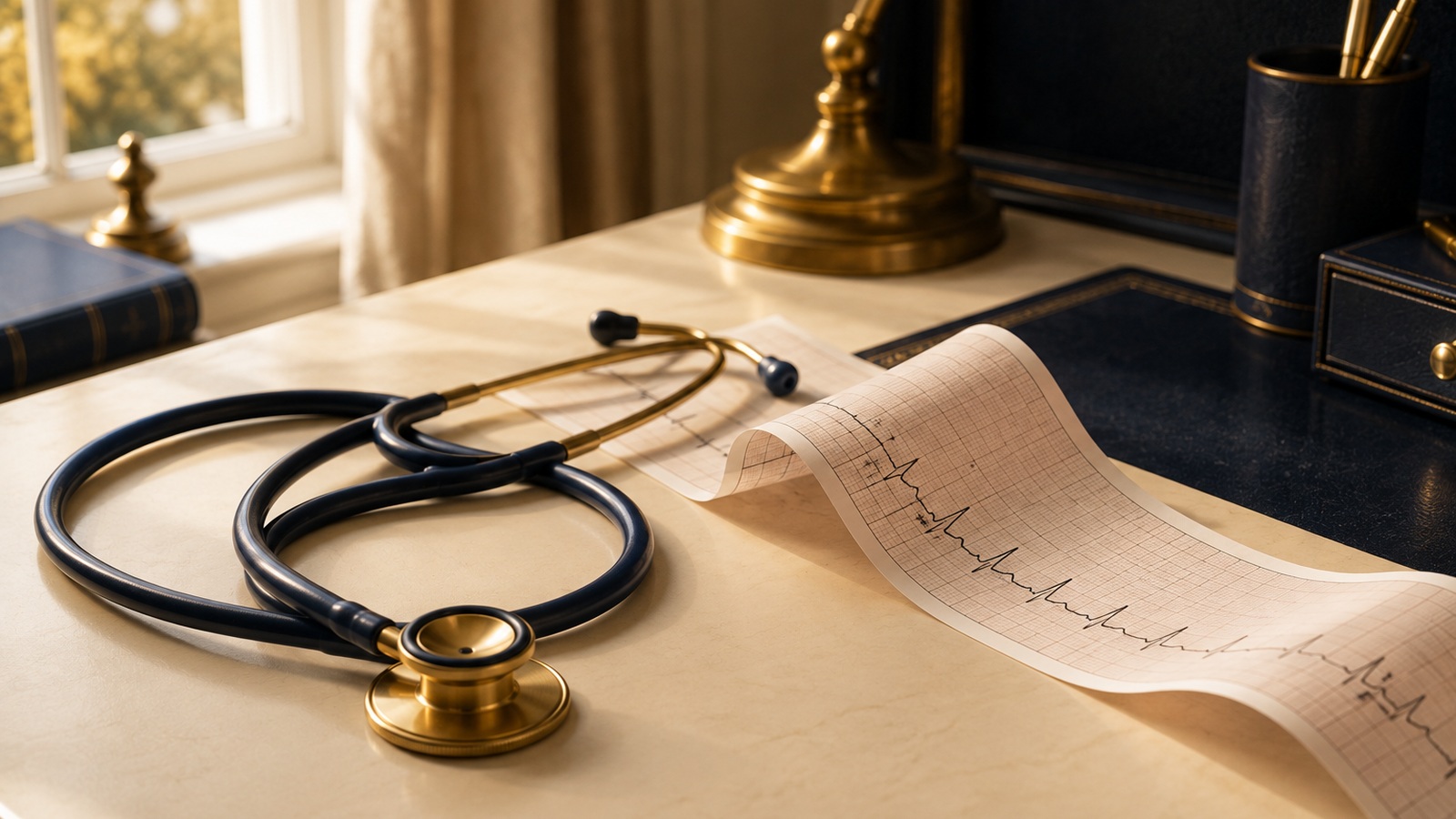
The starting point is an ECG — a snapshot of the heart's rhythm. Because palpitations rarely perform on cue, the test is chosen to match how often the symptom comes: a 24-hour or longer wearable monitor for frequent symptoms, and for rare, fleeting episodes, a small recorder placed under the skin that can watch the rhythm for months [2][3]. Capturing one episode on a tracing usually settles the question — in most people, with reassuring news.
The point of checking
Most people who have palpitations investigated hear the best kind of result: a normal heart being normally noticeable. Checking is what makes the reassurance real — and finds the treatable few for whom it matters.