When surgery is considered at all
A mildly leaking valve is common and usually just watched. Surgery enters the conversation when the leak is severe and causing symptoms — breathlessness, fatigue, palpitations — or when the heart begins to enlarge or weaken under the load even before symptoms are obvious [1][2]. Nothing about a mild, stable leak obliges anyone to operate.
Why repair comes first
Where the valve's own tissue allows it, guidelines are consistent: repair is preferred over replacement for degenerative mitral leaks [1][2]. A repaired valve is your own living tissue: long-term registry data following patients over twenty years show durable results with excellent survival after repair [3], and repair avoids the trade-offs a prosthesis brings [1][4].
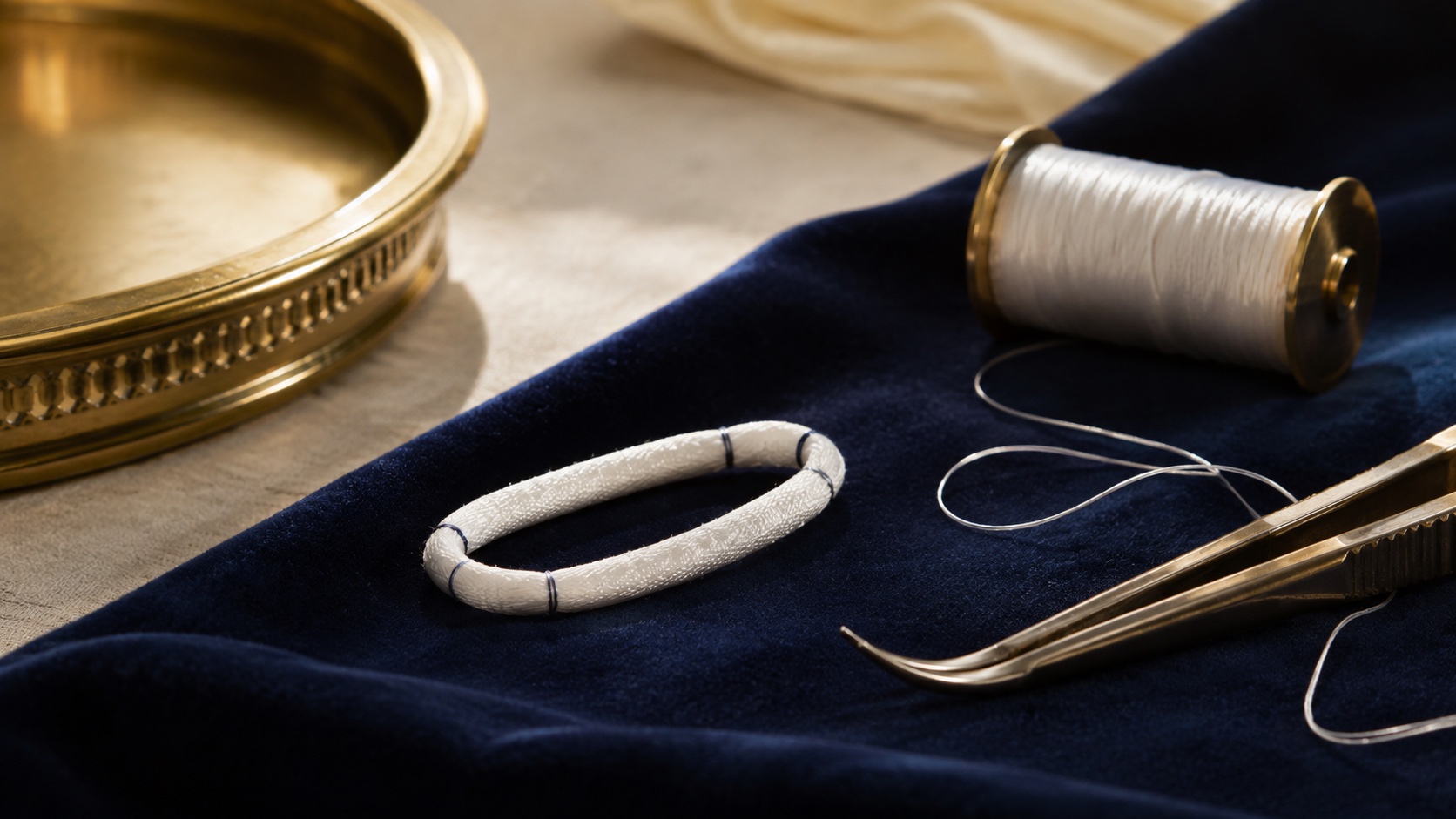
Repair is real surgery, not a lesser fix: the surgeon reconstructs the leaflets, may add supporting artificial cords, and usually completes it with a ring that steadies the valve's frame [1][4].
When replacement is the right call
Not every valve can be repaired — the tissue may be too damaged, too infected or too calcified [1][2]. Replacement then offers two kinds of valve, each with an honest trade-off [2][4]:
- A mechanical valve is extremely durable but needs lifelong blood-thinning medication with regular monitoring [2][4].
- A biological valve avoids long-term blood thinners but wears with the years and may eventually need another procedure [2][4].
- In leaks caused by a weakened, stretched heart (secondary regurgitation) rather than by the valve itself, the decision is genuinely more finely balanced, and treating the underlying heart comes first [1][2].
What an experienced team changes
The realistic chance of repair — rather than replacement — depends heavily on the team's experience with valve reconstruction. In the UK Mini Mitral randomised trial, conducted in experienced centres, 96% of valves were successfully repaired, and repair quality was the same whether the operation was done through the breastbone or through a small keyhole incision [5]. The route into the chest is a separate question from what is done to the valve.
The decision itself belongs to a Heart Team — surgeon, cardiologist and imaging specialist reading the same echocardiogram together — and it is made with you, weighing your valve's anatomy, your age and what matters to you [1][2].
What to ask
Three questions do most of the work:
- Is my leak degenerative (the valve itself) or secondary (the heart muscle)?
- What is the realistic chance my valve can be repaired rather than replaced — here, for my anatomy?
- If it cannot be repaired, which type of replacement fits my life — and why?