Mr Toufan Bahrami
Consultant Cardiac Surgeon — MD, FRCS (CTh), EBCTS
GMC number 6024981
Mr Bahrami is a consultant cardiac surgeon at Royal Brompton and Harefield Hospitals, part of Guy's and St Thomas' NHS Foundation Trust, where he leads the minimally invasive and endoscopic cardiac surgery programme. His practice spans mitral, tricuspid and aortic valve repair and replacement, aortic-root surgery, minimally invasive and beating-heart coronary bypass, surgery for atrial fibrillation and infective endocarditis, and complex reoperations. He has performed around 4,000 cardiac operations, more than 3,000 of them minimally invasive.
He trained at the Pitié-Salpêtrière in Paris, where he placed first in the French national specialisation examination, the Concours d'Internat, and worked with three of the defining figures of modern cardiac surgery: Professor Alain Carpentier — the pioneer of modern mitral valve repair — Professor Alain Cabrol, a pioneer of cardiac transplantation and complex aortic-root surgery, and, at Harefield, Professor Sir Magdi Yacoub. He has worked at Royal Brompton and Harefield since 2001, and is a former President of the British and Irish Society for Minimally Invasive Cardiac Surgery (BISMICS).
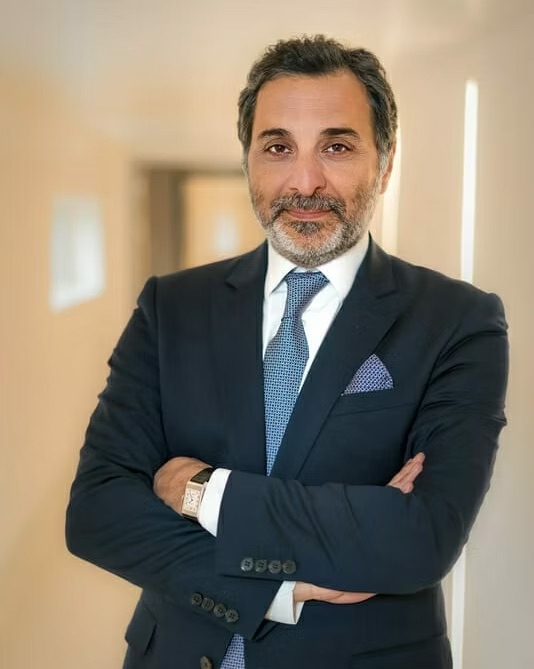
Minimally invasive and totally endoscopic surgery
Over more than two decades, Mr Bahrami has progressively moved conventional cardiac operations through smaller incisions: from minimally invasive approaches of six to seven centimetres (2010–2015), to endoscopically assisted surgery (2015–2021), to totally endoscopic operations from 2021 — the surgeon operating from a high-definition three-dimensional camera image through an incision of around 2.5 to 3 centimetres, rather than by opening the chest. Royal Brompton and Harefield report theirs was the first UK programme to perform the totally endoscopic valve technique it developed, and that by 2024 the team had performed more than 1,000 totally endoscopic procedures.
Operating through so small an access places extra weight on imaging: the programme plans its operations on advanced CT and three-dimensional reconstruction, in collaboration with Professor Saeed Mirsadraee, and in 2026 Mr Bahrami and colleagues published a systematic review of CT in the preoperative planning of minimally invasive valve surgery. His research programme now extends to robotic-assisted heart surgery.
Valve surgery
Mitral-valve repair is central to his practice — the direct line from his training with Alain Carpentier. Where the valve allows, it is reconstructed rather than replaced: leaflet repair, artificial chordae, annuloplasty. He performs both conventional and totally endoscopic mitral repair and replacement, and tricuspid repair and replacement — he co-authored the 2005 Annals of Thoracic Surgery study, led by Gilles Dreyfus, that helped establish annular dilatation rather than regurgitation severity as a criterion for repairing the tricuspid valve during mitral surgery.
In aortic surgery he began mini-sternotomy valve replacement in 2003, performed a sutureless aortic-valve replacement through a right mini-thoracotomy in 2014, and in 2016 implanted an INSPIRIS RESILIA aortic valve by a minimally invasive technique — reported by his institution as a first for that prosthesis and approach. He co-authored the 2023 UK consensus statement on aortic-valve replacement through an anterior right minithoracotomy, and his practice extends to aortic-root surgery, including valve-sparing root replacement, and complex redo operations. In 2017 he performed a combined minimally invasive mitral repair, arrhythmia ablation and coronary bypass, described by the Trust as a world first.
Coronary surgery
His coronary practice centres on beating-heart and minimal-access revascularisation: off-pump bypass, and minimally invasive direct coronary artery bypass (MIDCAB) — more than 600 MIDCAB procedures over some twenty years. He was an early pioneer of multi-vessel MIDCAB, publishing bilateral MIDCAB for triple-vessel disease in 2005, performed the UK's first endoscopic vein-harvesting procedure in 2007 as reported by Royal Brompton and Harefield, and his practice includes endoscopic atraumatic coronary artery bypass (EndoACAB).
The evidence behind the technique
Alongside developing minimal-access surgery, Mr Bahrami has worked to test it. He was Harefield's surgical investigator in the UK Mini Mitral randomised trial, published in JAMA in 2023, which found that minimally invasive mitral repair matched conventional sternotomy for repair quality, durability and safety — 96% of valves repaired overall — with earlier recovery of physical function on some measures. His group's 2025 study examined the transition from direct-vision to totally endoscopic mitral surgery, followed in 2026 by a propensity-matched comparison in JTCVS Open. He was also one of the surgeons performing thoracoscopic ablation in the CASA-AF programme comparing surgical and catheter ablation for long-standing atrial fibrillation.
Transplantation and the artificial heart
Before minimal-access valve and coronary surgery became his principal focus, Mr Bahrami worked extensively in Harefield's heart and lung transplantation and mechanical circulatory support programmes. In 2007 he performed the first double-lung transplant from a donor after circulatory death, as recorded by the Trust, publishing the programme's experience in 2008; he has co-authored research on ventricular-assist devices, including HeartMate II and HVAD, and on the Organ Care System for preserving donor hearts. That background — operating on patients with severely impaired ventricular function, previous operations and advanced heart failure — underpins his practice in high-risk and reoperative surgery today.
Teaching and national roles
Mr Bahrami organises courses in Geneva for consultant surgeons in minimally invasive and sutureless aortic-valve surgery, and teaches minimal-access surgery at national and international meetings. He served as President of the British and Irish Society for Minimally Invasive Cardiac Surgery from 2023 to 2025, with a stated aim of promoting safety and education in minimal-access techniques, and is a clinical ambassador for the Royal Brompton and Harefield Hospitals Charity.
In conversation
 Watch the conversation
Mr Bahrami in conversation on Anatomy of a Leader (1 hr 51 min). Video by Anatomy of a Leader, shown with permission.
The Heart Team
Mr Bahrami is the surgeon of the three. Where imaging points to the valve or the vessel, he is already across the case — and whether an operation is needed at all is decided with the radiologist and cardiologist together, before anything is recommended.
Contact
WellHeart London
45 Weymouth Street, London W1G 8NE